Key Takeaways
Track redemption as a cohort rate, not points redeemed over points issued, or young programs will always look like they are failing.
Published redemption benchmarks vary widely because they define the rate differently, so build your own baseline by tier and frequency.
A sudden jump in redemption is not always good news: check for repricing, promo spikes, or account takeover before you celebrate.
Your loyalty dashboard shows a healthy member count and a points balance nobody is spending. Finance reads that balance as liability, marketing reads it as engagement, and neither is quite right.
Redemption rate settles the argument, because it shows whether members are using what you built for them. It is also one of the most misquoted numbers in loyalty. Two teams can calculate it four different ways and get four different answers.
This guide covers how to calculate it properly, what a good number looks like for your program, why members stall, and how to raise redemption without wrecking the program's economics.
How to calculate loyalty redemption rate
The textbook formula is points redeemed divided by points issued, times 100. It is simple, and often wrong for the question you are asking.
Say you issued 10 million points last year and 3 million were redeemed. That 30% rate mixes points issued last month, which members have had no time to spend, with points issued three years ago. Pick the version that matches the decision in front of you.
| Version | Formula | Best for | Watch out for |
|---|---|---|---|
| Points rate | Points redeemed ÷ points issued | Finance and liability planning | Skews low in young programs or heavy-issue periods |
| Cohort rate | Points from one issue period redeemed within a fixed window ÷ points issued in that period | Comparing campaigns and measuring true breakage | Needs a consistent window and clean issue dates |
| Member rate | Members who redeemed at least once ÷ active members | Engagement health | Hides how much each member redeems |
| Value rate | Reward cost redeemed ÷ reward cost issued | Budgeting against margin | Needs cost data per reward, not just point counts |
Track the cohort rate as your headline number. The others answer secondary questions.
What is a good loyalty redemption rate?
There is no single answer. Search for a benchmark and you will find figures that vary widely. The spread is mostly definitional. Some sources count points, some count members, and some count every reward, cashback and coupons included. Comparing your points-based cohort rate to someone else's member-based rate tells you nothing.
Four things move the number more than program quality does:
- Purchase frequency. A weekly coffee buyer and a once-a-year tire buyer will never redeem on the same curve.
- Reward value against earn rate. If the smallest reward takes a year to reach, most members never see one.
- Program age. Young programs carry points that haven't had time to be spent.
- Expiry rules. Points that expire get redeemed, or lost, on a different timeline.
So build your own baseline. Pull 12 months of issue cohorts and split them by tier and purchase frequency. Find where each curve flattens. A cohort that redeems 25% of its points in year one and then stalls is a very different problem from one still climbing.
The outside evidence points one way: redemption pays for itself. A study of 3,094 members of a Dutch loyalty program, published in the *International Journal of Research in Marketing*, found members bought more both before and after they redeemed, and the program needed no expiry rules or high thresholds to get there.
Unspent value is large. COLLOQUY estimated in 2011 that at least a third of the roughly $48 billion in points and miles U.S. consumers earn each year goes unredeemed. The 2011 figure is old, but the direction still holds.
1/3
Of U.S. points and miles value estimated unredeemed
COLLOQUY, 2011 (dated)
28%
Of Canadian members redeem once a year or less
Bond Loyalty Report, 2026 (Canada only)
3,094
Members in the study linking redemption to higher later spend
Dorotic and Verhoef, 2014
Sources: COLLOQUY (2011), Bond Loyalty Report (2026), International Journal of Research in Marketing (2014)
See how Xoxoday Loyalife reports redemption by cohort, tier and segment
Real-time redemption, liability and participation views, so your team fixes the right tier first.
Book a free 30-min demoTrusted by 5,000+ companies
Why members stall before they redeem
Low redemption is rarely about apathy. It usually traces back to one of five specific design problems:
- The first reward is too far away. A customer who shops twice a year and needs 5,000 points for the smallest reward will never see one. A well-built loyalty points program sets that first threshold around real purchase frequency.
- The catalog doesn't match the member. A shelf of rewards nobody wants gets ignored, however many points are on offer.
- Redeeming takes too many steps. Logins, minimum balances and multi-page checkouts all cost you members at the last step.
- Members don't know their balance. If points are invisible between purchases, they might as well not exist.
- A point has no obvious value. When nobody can say what 100 points buy, hoarding feels as safe as spending.
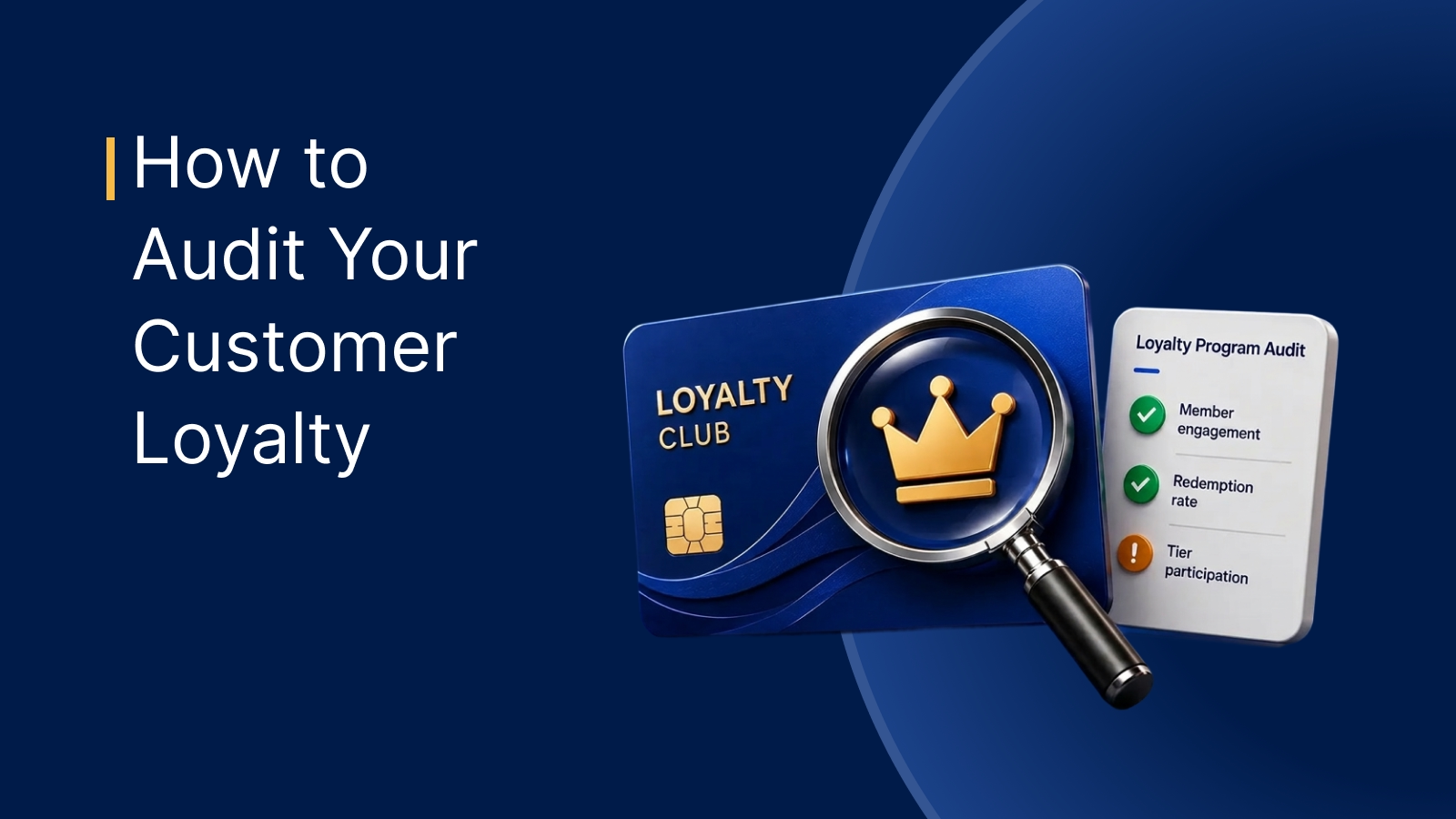
A loyalty program audit will show you which of these dominates in your program. The fix is usually one or two of them, not all five.
Five ways to raise your redemption rate
Shorten the path to a first reward
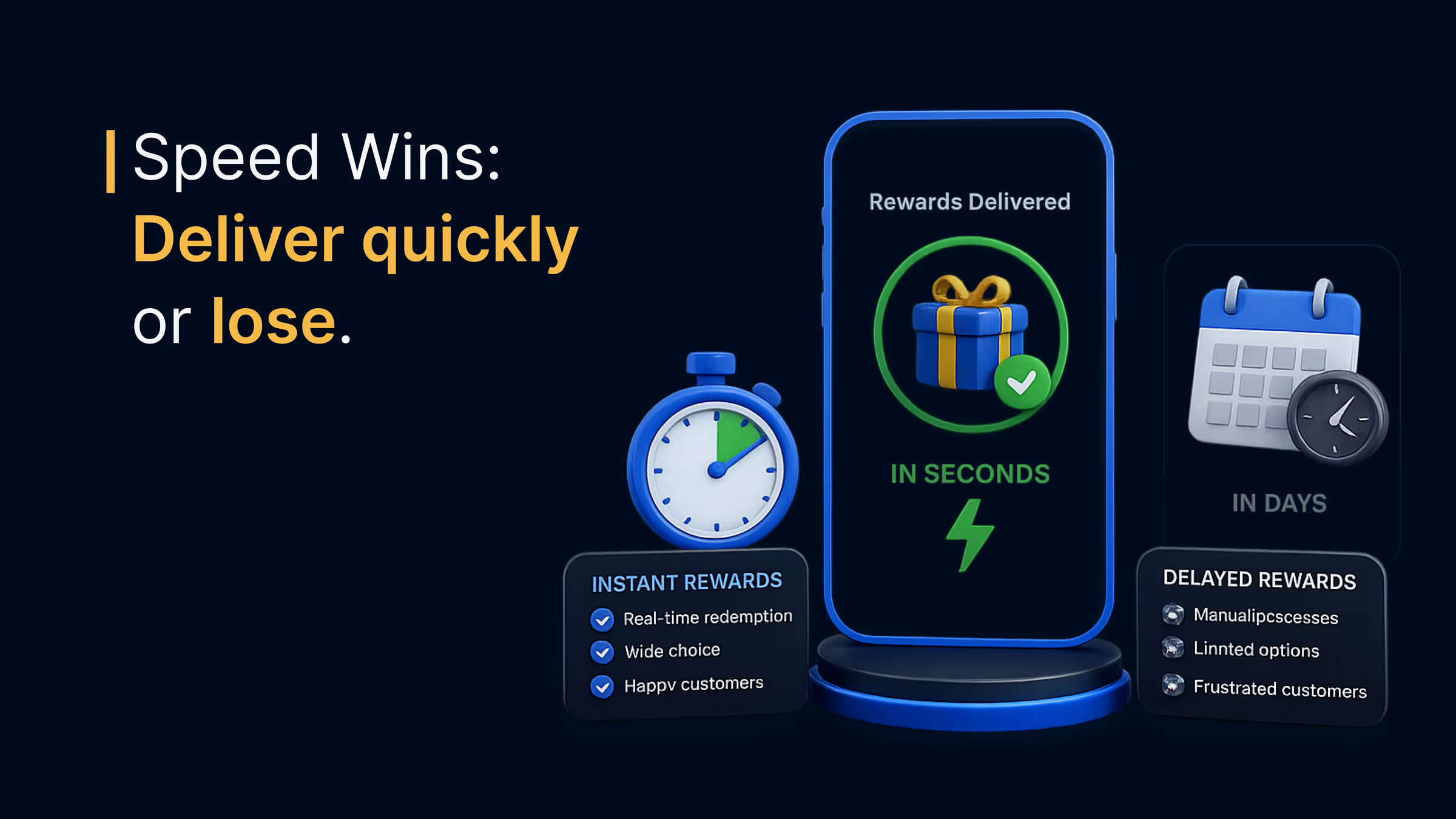
Let new members reach a real reward within their first two or three purchases. A first redemption builds the habit, and the study above found members bought more after redeeming.
Add low-value, high-frequency rewards
Instant vouchers worth a few dollars keep members in the habit. Large aspirational rewards still have a place, but they shouldn't be the only option. If points feel abstract, weigh cashback against points, since cash value is easier to redeem.
Cut friction at the last step
One tap from balance to reward. No minimum balance for small rewards, and a path that works in whichever channel members already use.
Nudge on behavior, not on a calendar
Send a message when a balance is close to a reward, not on the first of every month. In a grocery loyalty program study in the *International Journal of Research in Marketing*, in-app push notifications moved redemption more than they moved spending.
Turn balances into play
Gamification in loyalty programs works best when challenges are short and tied to a reward members already want. For mechanics beyond earn and burn, see these loyalty program ideas that aren't points.
See how Xoxoday Loyalife reports redemption by cohort, tier and segment. Real-time redemption, liability and participation views, so your team fixes the right tier first. Book a free 30-min demo.
When a higher redemption rate is a warning sign
Breakage, the share of points that never get redeemed, is a budget line, not a failure. Some is baked into your economics by design. Chasing 100% redemption is as wrong as ignoring breakage.
A rising rate can also be the symptom of a problem. If redemption jumps 15 points in a quarter, ask what changed before you celebrate. It might be a catalog repricing, a double-points promotion that pulled spend forward, or an account takeover draining member balances.
| Pattern | What it usually signals | First move |
|---|---|---|
| Low and flat | Rewards out of reach or irrelevant | Lower the first-reward threshold; test low-value rewards |
| Falling cohort over cohort | Program fatigue or a catalog that has gone stale | Refresh rewards; review communication cadence |
| Very high and climbing fast | Repricing, a promo spike, or fraud | Check recent changes and look for balance-drain patterns |
| High in one tier only | Lower tiers are priced out | Add attainable rewards below the top tier |
Redemption also feeds retention: members who spend their rewards are less likely to drift, as our guide on how to reduce customer churn explains. Pair redemption with your other loyalty program KPIs and your ROI measurement before drawing conclusions. Redemption alone can't tell you whether the program is working.
How Loyalife approaches redemption
Redemption debates stall when finance and marketing look at different numbers. Xoxoday Loyalife, a loyalty program software platform, reports liability, funnel and participation views by tier, region and segment, so finance and marketing work from one set of numbers in loyalty reports and insights. If you are still choosing tooling, compare loyalty analytics and measurement tools.
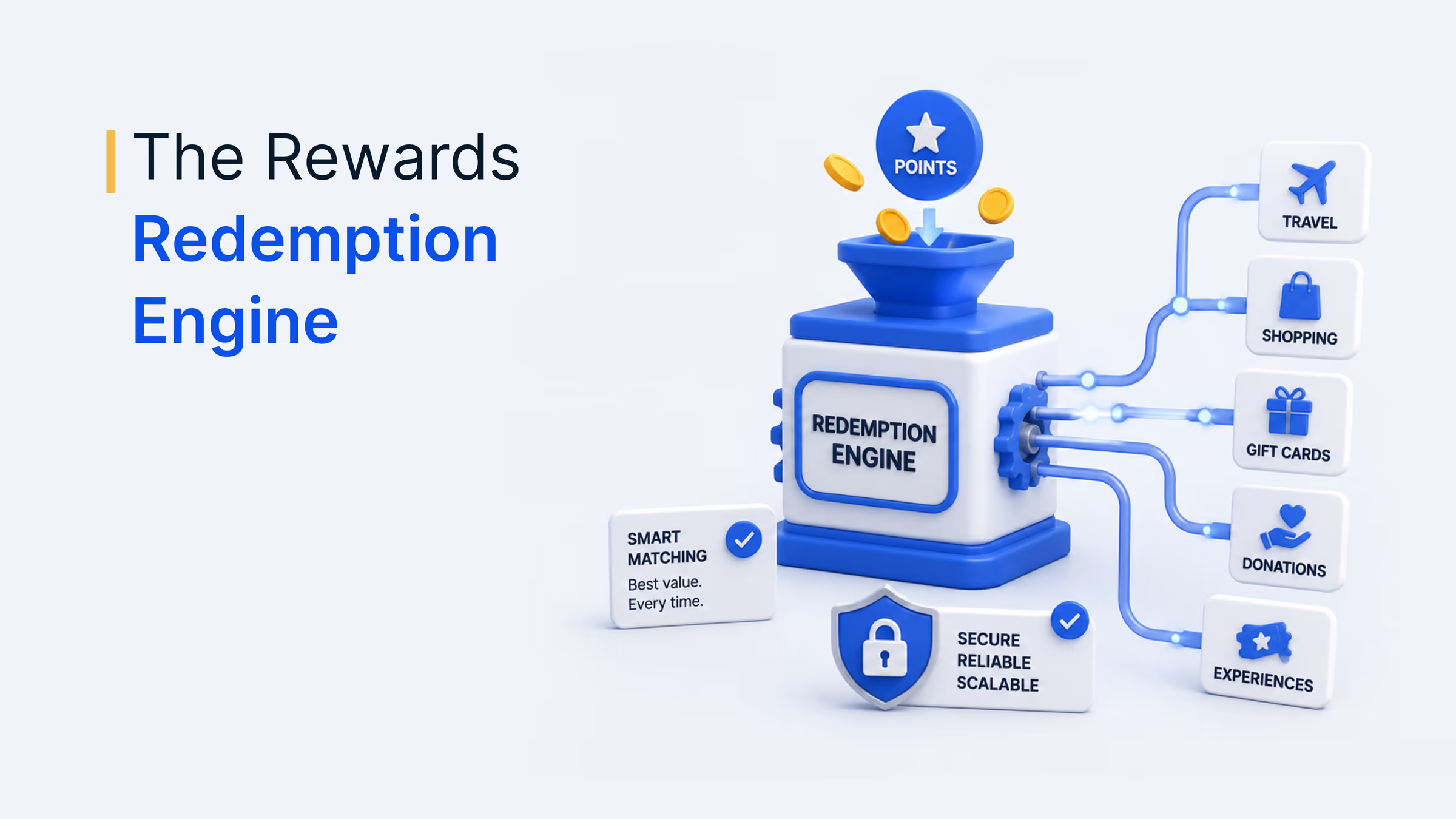
Earn rules, tier thresholds and bonus triggers are configurable, so lowering a first-reward threshold or running a bonus-points week doesn't wait on a development ticket. On the reward side, members redeem from a catalog of 10M+ rewards options across 150+ countries through the rewards marketplace, including instant vouchers suited to frequent, low-value redemption.
Your next step: pick one cohort
Pull last year's issue cohorts this week. Calculate each one's 12-month redemption rate, then find the tier or segment where the curve flattens. Fix that one first, and measure again in a quarter.
Book your Loyalife demo
Frequently asked questions
There is no universal number, because published figures define the rate differently. Compare your cohort redemption rate against your own history by tier and purchase frequency. A falling cohort-over-cohort curve is a clearer warning than any outside average.
The basic formula is points redeemed divided by points issued, times 100. For a truer picture, calculate it by cohort: the share of points issued in one period that members redeemed within a fixed window, such as 12 months.
Breakage is the share of issued points that are never redeemed, usually because they expire or members forget them. Some breakage is built into program economics. Too much usually means rewards are out of reach or irrelevant.
Shorten the path to a first reward, add low-value instant rewards, remove friction at checkout, and nudge members when a balance nears a reward. With Xoxoday Loyalife, these changes are configured in the rule engine and rewards marketplace rather than built from scratch.
No. A sudden rise can come from repricing, a promotion that pulled spend forward, or fraud draining balances. Check what changed before treating it as success.