Key Takeaways
Card-linked loyalty rewards the card, not a coupon, so cardholders do nothing extra at checkout and enrollment friction drops.
73% of card users prefer cards with linked offers, yet only 41% have used one: awareness, not appeal, is the gap to close.
Merchant-funded offers only last if merchants can see incremental spend, so build the ROI measure before the first offer goes live.
Most loyalty programs ask the customer to do something at the till: scan a code, show a card, recall a phone number. Card-linked loyalty asks for nothing at checkout, and that is exactly why it works.
If you have run a rewards app, you know the pattern. Members enroll, collect a welcome bonus, and never open the app again. A rewards portal that cardholders must remember to visit is a portal most of them will not visit.
This post explains how card-linked programs recognize a purchase on their own, who pays for the rewards, where the model breaks, and what to set up before launch.
What is a card-linked loyalty program?
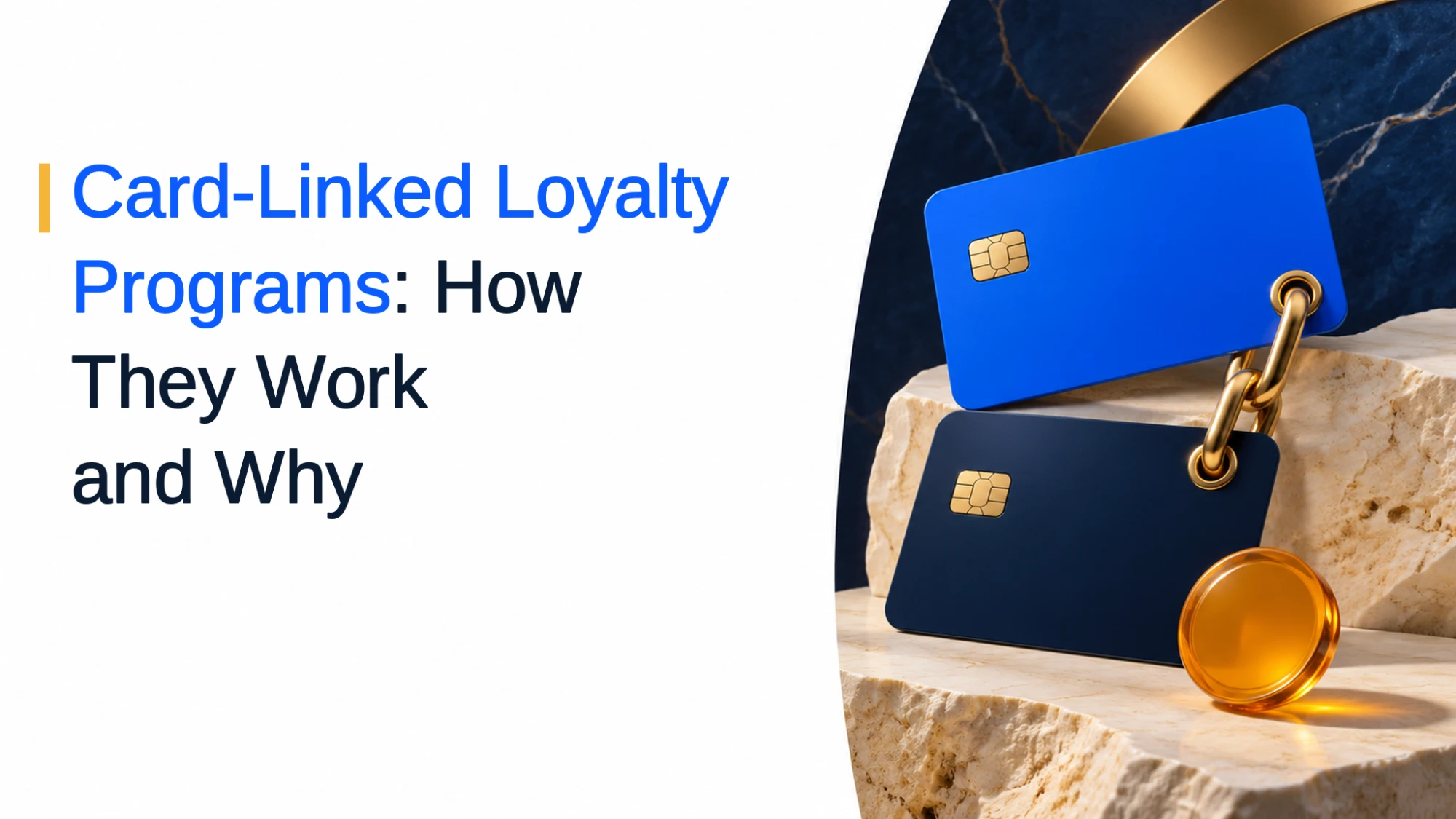
A card-linked program ties rewards to a payment card instead of a membership card, an app login, or a coupon. The cardholder opts in once and links a debit or credit card. After that, every qualifying purchase on that card is recognized automatically, and the reward posts afterward as points, cashback, or a statement credit.
The card is the identity. Two things often get lumped together under the name:
- Card-linked offers: a merchant-funded deal, such as 10% back at a specific retailer, delivered through a banking or rewards app.
- Card-linked loyalty: points, tier benefits, or bonuses an issuer or brand awards based on card spend, with no merchant funding involved.
Many programs run both at once, which is why the rules behind them matter more than the label.
How card-linked loyalty works, step by step
The mechanics are simpler than the vocabulary:
- The cardholder opts in and links a card. This usually happens inside a banking app, a rewards app, or a retailer's own app.
- An offer or earn rule is matched to the member. Matching depends on merchant, spend category, amount, or date.
- The cardholder pays as usual. No code, no coupon, no loyalty card.
- The transaction data reaches the program. It arrives through the issuer or processor, often hours or days after the purchase.
- The reward is credited and the member is told. The balance updates and a push, SMS, or email confirms it. Where a merchant funds the offer, settlement with that merchant follows.
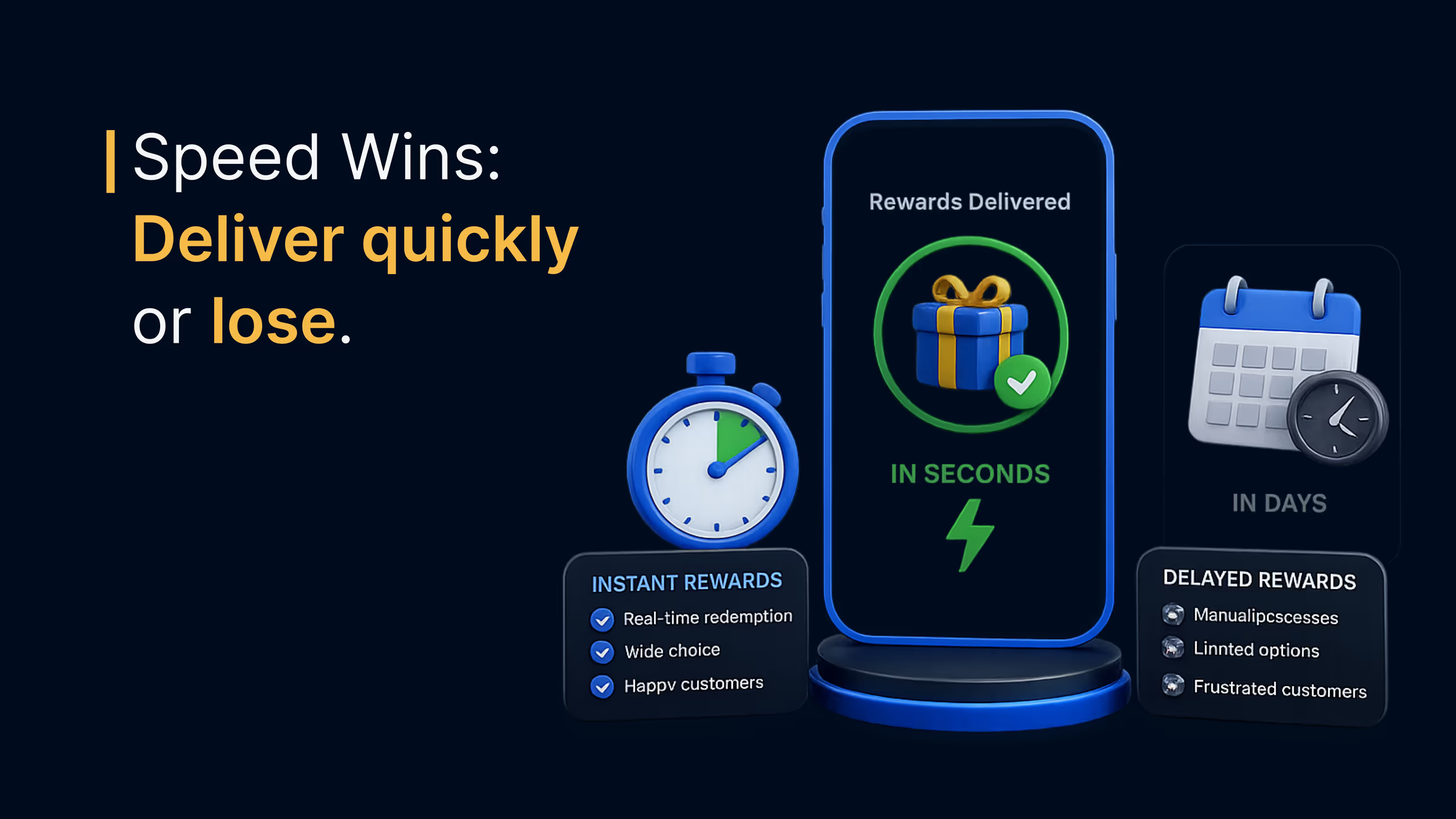
Step four is where most real-world problems start. A purchase that is later returned has to reverse the reward, and a transaction that posts days late can miss an offer window. Programs that credit rewards instantly learn this the expensive way. Good rules delay posting until the return window closes.
See how Loyalife turns card transactions into rewards
Watch rules, tiers, and fraud holds run on a live card transaction feed in a 30-minute demo.
Book a free 30-min demoTrusted by 5,000+ companies
Who is involved, and who pays for what
Five parties touch every card-linked reward, and each one wants something different:
| Participant | What they bring | What they get |
|---|---|---|
| Cardholder | Card, consent, spend | Rewards without extra steps |
| Issuer bank | Cardholder relationship, transaction data | Engagement and a rewards cost partly funded by others |
| Merchant | Offer budget, products | New and repeat customers it can measure |
| Network or processor | Transaction feed, card linking | Transaction volume |
| Loyalty platform | Rules, ledger, tiers, redemption | A program that runs without manual work |
The issuer's position has changed the most. Interchange-funded points and miles are under pressure, and merchant-funded offers let a bank keep rewarding customers without carrying the whole cost.
Why removing the checkout step matters
Customers do not reject loyalty. They reject the effort. According to PYMNTS Intelligence and Banyan, 73% of card users prefer cards with linked offers, yet only 41% had used one in the prior 12 months.
73%
prefer cards with linked offers
PYMNTS Intelligence and Banyan, 2,069 U.S. consumers
41%
used one in the last 12 months
Same survey
46%
of offer users proactively hunt for deals
PYMNTS with Banyan, 2025
6.9 vs 4.4
redemptions a year: merchant-specific discounts vs general rewards
PYMNTS with Banyan, 2,826 U.S. consumers
The awareness gap in card-linked offers
The gap is awareness, not appeal. Among people who had never used a card-linked offer, the leading reason was simply not knowing they existed.
Engagement also follows effort. PYMNTS found that 55% of cardholders who say redeeming rewards is easy use most or all of their available benefits, while 56% of those who do not fully use them cite inconvenience.
Card-linked offers vs points, cashback, and coupons
The right model depends on who you are and who funds it. Our guides on types of loyalty programs and cashback versus points cover the fundamentals. Here is the comparison:
| Model | Customer action at checkout | Who typically funds it | Best for |
|---|---|---|---|
| Card-linked offers | None after opt-in | Merchant | Banks and rewards apps driving spend at partner merchants |
| Points program | Show a member ID or log in | Brand | Repeat purchase at one brand |
| Cashback | Often none | Brand or issuer | Simple, transparent value |
| Coupons and promo codes | Enter or scan a code | Brand | Short campaigns and acquisition |
Card-linked sits closest to a credit card rewards design, which is why issuers adopted it first. Retailers can use it too, if they partner with an issuer or processor that supplies the card transaction feed.
What card transaction data gives you that an app cannot
A loyalty app sees what happens in your channel. Card data, where an issuer shares it with consent, can show spending at other merchants and in other categories, so offers can be matched to what a customer already buys.
Shared card data comes with obligations. Use consented data, keep personal data under role-based access, and follow the regional rules that apply. Ask any partner whether the merchant ever receives a card number. In most setups it does not, because matching runs through the issuer or processor.
Where card-linked programs go wrong
Cardholders never learn the offers exist
An offer buried three taps deep in a banking app has no audience. Announce it where customers already look, and trigger a message when a relevant offer appears.
Redemption feels like work
If a customer must activate every offer, they will skip most of them. Auto-enroll where regulations allow, and show the earned reward the same day it posts.
Merchants cannot see the return
A merchant that funds an offer will ask what it got for the money. Set up a control group before launch, and report incremental spend, not just redemptions.
Returns and fraud eat the margin
Late-posting returns, duplicate transactions, and unusual spikes all leak rewards. Cap points per transaction and hold outliers for review.
How Loyalife approaches this
Card-linked offers tell you who earned what. The loyalty engine decides what that transaction is worth. Loyalife is built for the second part.
It takes the issuer's transaction feed in real time through APIs or as scheduled files. The rule engine then checks each transaction against amount, merchant category, and date, applies caps, and delays posting until a return window closes. Transactions above a set threshold are held for review before any points move. Tiers upgrade or downgrade on their own, and a triggered campaign can nudge a member who has not spent in 30 days. Points are redeemed through the rewards marketplace.
The merchant offer network and the card linking itself usually sit with the issuer's processor or an offer network. What Loyalife adds is the layer after the transaction lands: the rules, the ledger, the tiers, and the redemption.
A practical way to start
Start small and measure early:
- Pick one segment and one category. A single merchant category and one cardholder group is enough to learn from.
- Write the rules and caps first. Define points per transaction, the return window, and the fraud threshold before launch.
- Define the merchant ROI measure. Agree on a control group and on incremental spend as the headline number.
- Launch where members already are. Put it in the app they open daily, with a push message on the first reward.
- Review monthly. Track the KPIs that matter to finance and marketing and tie them to loyalty program ROI.
Banks can run all of this on one customer loyalty platform and go deeper with the bank loyalty launch playbook and our guide to financial services loyalty programs. Still choosing between a closed and an open program? Read open loop vs closed loop loyalty first.
Your next step to a card program people actually use
Card-linked loyalty works because it takes the customer out of the process. The programs that last are the ones whose rules were written before the first offer went live. Start with one segment, one set of rules, and one number the merchant trusts.
Book your Loyalife demo
Frequently asked questions
Rewards attach to a payment card instead of a membership card or coupon. The cardholder links a card once, and qualifying purchases earn points, cashback, or a credit automatically.
The cardholder opts in, links a card, and pays as usual. The issuer or processor sends the transaction data, the program matches it to an offer or earn rule, and the reward posts to the account.
It depends on the model. In card-linked offers, the merchant usually funds the reward. In card-linked loyalty, the issuer or brand funds the points or cashback.
Cashback is a type of reward, while card-linked describes how the purchase is recognized. A program can pay cashback through card linking, or through receipts, codes, or an app.
In most setups the merchant does not receive your card number, because matching runs through the issuer or processor. Read each program's privacy terms, and skip any that does not ask for consent.